Decentralisation has become another buzzword in the digital environment. Along with blockchain and NFTs, everyone is talking about Decentralised Autonomous Organisations (DAOs). But what is the raison d'être that has made decentralisation an inherent component of what we now know as Web3? What are the features of these organisations and how do they cross all areas of digital-related business and labour?
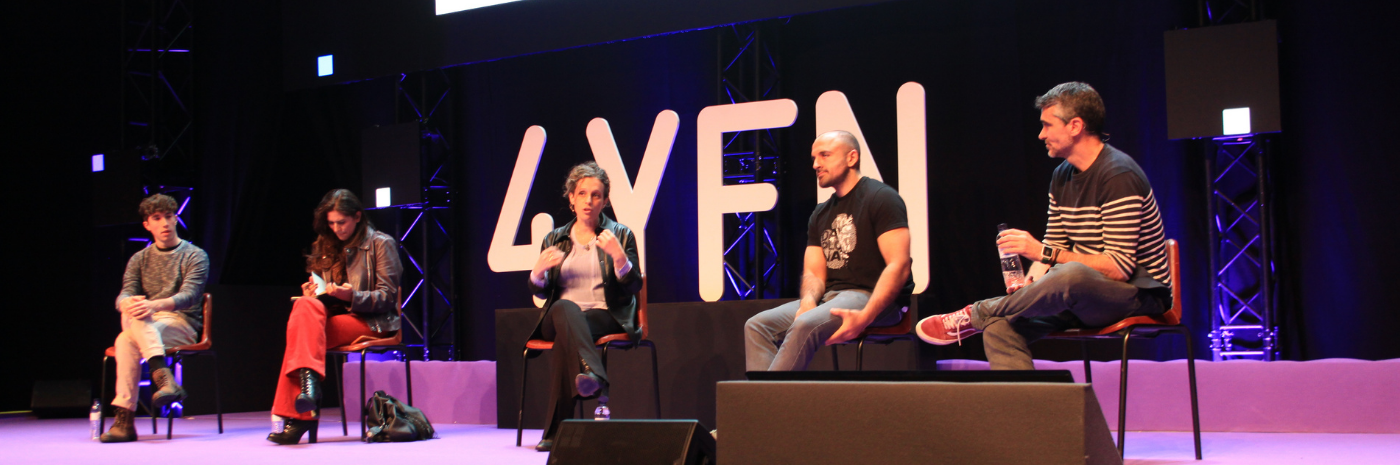
This was the main topic of debate at the panel New Tribes in a Decentralised Society, held on 1st March in the context of the 4YFN event. Alex Puig, NGI Ambassador and CTO of Caelum Labs, moderated the session. The NGI Community could not miss the opportunity to listen to the voices of these new tribes in a decentralised society.
Who is leading the DAO wave?
Together with Puig, the panel gathered a new wave of minds that have dove into Web3 with new views and values. They are part of the traditional players who have jumped into this new model of organising, that is more human-centric and less dependent on big structures holding bigger amounts of power.
- Jahed Momand: a core steward of PrimeDAO, making it easier for DAOs to cooperate via smart contracts.
- Yonat Vaks: a crypto-artist and cofounder of Zero
- Úrsula O’Kuinghttons: PR Director at Parity Technologies (Polkadot), Web3 Foundation
- Pol Martí: 20 YO entrepreneur (CEO, Rand Network) and expert in decentralised finance.
Core features of a decentralised organisation
- Decentralisation can bring people together. One of the main values of DAOs is the ability to maximise people's autonomy. One of their core values is to empower people by connecting them in such a way that power is also decentralised. People collaborate, in a bottom-up power scheme that is, in the words of our ambassador Àlex Puig, "the secret sauce of Web3".
- The importance of creating a community. Another key aspect of this type of organisation is its ability to create a sense of belonging within a community. Greater capacity for control and participation in decision-making, brought about by the decentralisation of power, can make sectors that were previously restricted to an elite accessible to all. This is the example given by crypto-artist Yonat Vaks regarding digital art collecting with NFTs.
- Decentralised protocols: harder; better. A common thread running through the views of the participants in this panel was the fact that decentralisation requires greater efforts to create and reconcile different protocols. However, this handicap is seen as a necessary effort in order to achieve greater levels of freedom, which can foster social improvements.
- Decentralisation and regulation: compatible concepts? A recurring issue when discussing DAOs is their regulatory compliance levels. The experts agree that regulation in most cases lags behind technological development and social evolution. And this is a natural phenomenon in many other fields. In any case, decentralisation does not need to imply lack of compliance per se. On the contrary, DAOs seek to find protocols within the regulatory framework, but the biggest challenge continues to be: how to regulate something that operates worldwide?
What is clear is that the course in which the web and digital applications are evolving advocates for decentralisation. Indeed, it is one of the core values of the Next Generation Internet (NGI) initiative, not only in terms of distributed protocols, but also in terms of organisations and systems in which power, leadership and access are dispersed too.
The new tribes operating in Web3 do not understand the Internet in any other way, so they are moving away from the centralised models of the traditional players to a new generation in which the possibilities for collaboration are greater, and humans are at the centre.
 marta.albujar
4 de marzo de 2022
marta.albujar
4 de marzo de 2022