 kaodro
23 de octubre de 2024
kaodro
23 de octubre de 2024
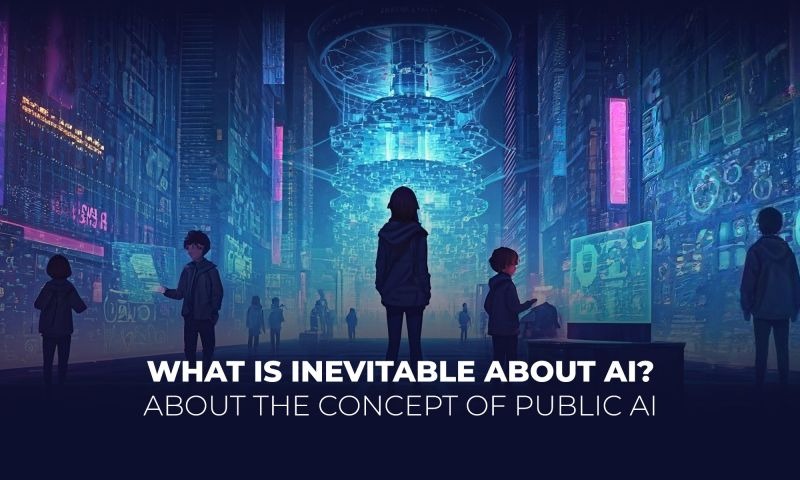
Just under two years ago, when generative AI exploded onto the scene, I was invited to give a keynote at a conference called DokuTech in Kosovo. I remember being both fascinated by large language models (LLMs) and deeply concerned about what could go wrong. I wondered how to start my talk in a way that captured these mixed feelings. In the end, I opened with a big question: “What is inevitable about AI, and who should decide?”
I strongly believe in agency and refuse to accept things simply because they've always been done that way, or because someone powerful says so. But in the realm of technology, the power to decide or change can be quite invisible. Most of us are users, playing with the building blocks provided by those who control the decision-making, which in turn shapes how we learn, and increasingly, how we think and feel (AI boyfriends and girlfriends, hello!).
We’re at an inflection point (and I still believe it’s not too late!) where AI is actively being studied and questioned. And we must all be intentional about who we seek answers from when it comes to how technology can best serve people.
By now, we’re accustomed to big tech companies like OpenAI, Google, and Meta setting the tone. After all, they have the money, the talent, and they’re buying up the resources and infrastructure needed to train the models (as most people know, data and compute power are among the “hottest” and most expensive resources out there). There’s a lot of money to be made with generative AI. Will the usual winners consolidate power once again? Companies are driven by profit, which is how they function in a capitalist system. But when technology spans from something as simple as smooth pizza delivery to as complex as predicting protein structures or addressing high-stakes public issues, I think we need to differentiate. Are we too distracted by trying out the latest chatbot or hashing out our little differences to draw a big, bold line and set a counterpoint to the trend of unchecked private ownership and centralized decision-making? Why are we allowing the supposedly “inevitable” to happen without a strong, coordinated intervention for the public interest?
I am of course and fortunately not the only one asking these questions. Rooted in the old idea of commons and public services, the idea of a Public/Public Interest AI is gaining traction. Among several efforts by others, Mozilla has published a white paperoutlining an approach to advancing public alternatives throughout every step of AI development and deployment. Public AI is pushes for AI to be built as open access and as shared resources (incl. the expensive ones like GPUs!), with a public orientation (built with people, not profits in mind) and prioritizing AI applications in the public interest (such as those addressing health or climate concerns and especially those who shouldn’t be built by private companies due to their ethical or security concerns - or basically because they shouldn’t be driven by profit incentives).
Achieving this vision requires a lot. Money, stakeholder coordination and working examples come to mind at first. As usual, we need money that comes with no - or not many - strings attached that would hinder the vision. The public AI ecosystem needs to be sustainable enough not to bend towards the capitalist machine of prioritizing profit while struggling with fragmented funding or overworked volunteers. Will governments and international institutions step up, alongside other actors like angel investors and philanthropic organizations? Will we develop business models that operate under different rules but still have the potential to scale? How do we keep the power balance with decentralized ownership and decision making? The internet’s success happened largely due to its decentralized nature—how can one apply that thinking to technology in a system that is already conditioned by the interests of big tech giants? And finally, public or open doesn’t make it automatically right or ethical. How do we make sure that Public AI actually serves (all) people and that it is built correctly from the start, minimizing bias and ensuring safety and accountability? If we nail that one, we can even set standards for the industry.
Lots to figure out.
But we don’t start from zero. An estimated $850 million has already been invested in Public AI labs. Many governments and international collaborations are advancing the idea of AI serving the public. There are several examples of what could be considered public AI already out there, such as Mozilla’s own Common Voice dataset, Common Corpus dataset or the remarkable open LLM Bloom. But we need more: a lot more coordination and getting on the same page across policy, developers, NGOs, academia and philanthropy to make this an effort that can set a true complementary counterpoint to the industry dominated AI market.
I’d be very curious to hear from the NGI community: do you think this is a realistic vision? What are the biggest obstacles or opportunities here? And do you have other examples of what’s already working?