 ninadok
8 de julio de 2020
ninadok
8 de julio de 2020
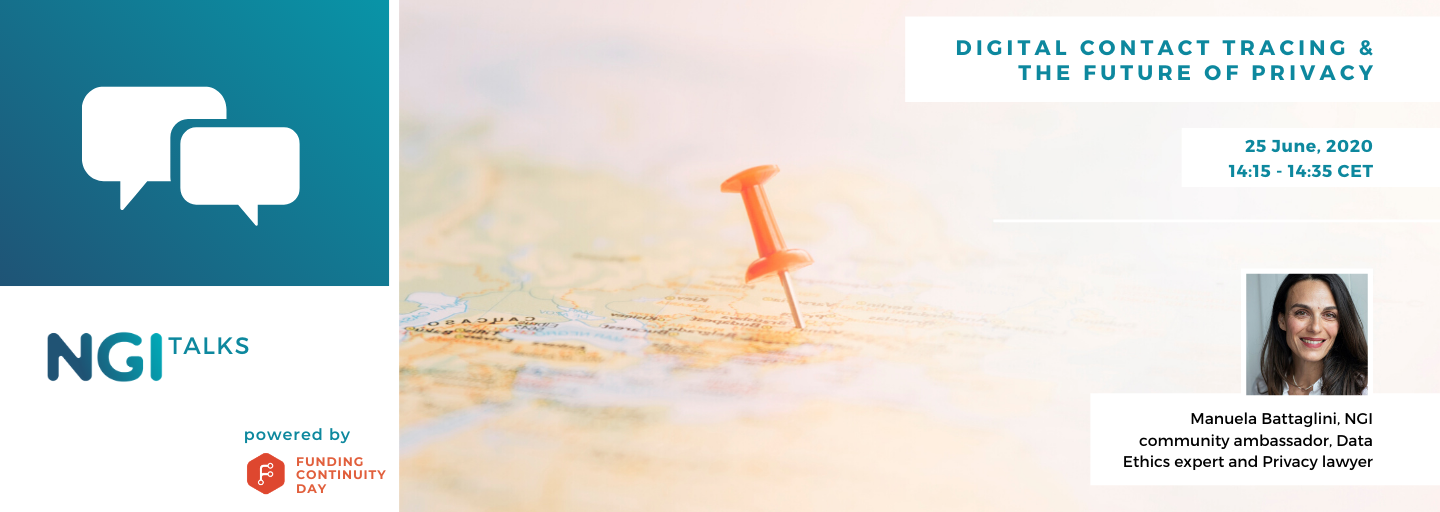
Last Thursday, Manuela Battaglini, Data Ethics expert and Privacy lawyer, spoke about “Digital contact tracing & the future of privacy” in the Funding Continuity Day. She is a specialist in strategic marketing, CEO of "Transparent Internet" and a Next Generation Internet Ambassador.
“The creation of a new technology implies a new adaptation process for users”, asserts Battaglini. During the Industrial Revolution human beings needed between 20 to 30 years to adapt to new innovations. For instance, in the case of the invention of the car or the airplane.
“At the beginning, human adaptability was faster than technology innovation, but now tech is going at a faster speed than human adaptability”, explains Manuela Battaglini. In fact, right now we need between seven to eight years to adapt to new technologies.
In their efforts to tackle the COVID-19 crisis, organizations are considering the development and use of smartphone applications for contact tracing. This technology tracks down anyone who potentially might have been infected, so those contacts can be in quarantine to prevent further spread.
Even though these applications differ in technology and methods, there is an increasing concern about their implications for privacy and human rights. In this webinar, we will evaluate their suitability in terms of impact on the users, employed technology and governance methods.
“Startups must create an ethical and global framework to achieve the success of the implementation of new technology", added Battaglini.
Discover more!