 denjell
26 de junio de 2024
denjell
26 de junio de 2024
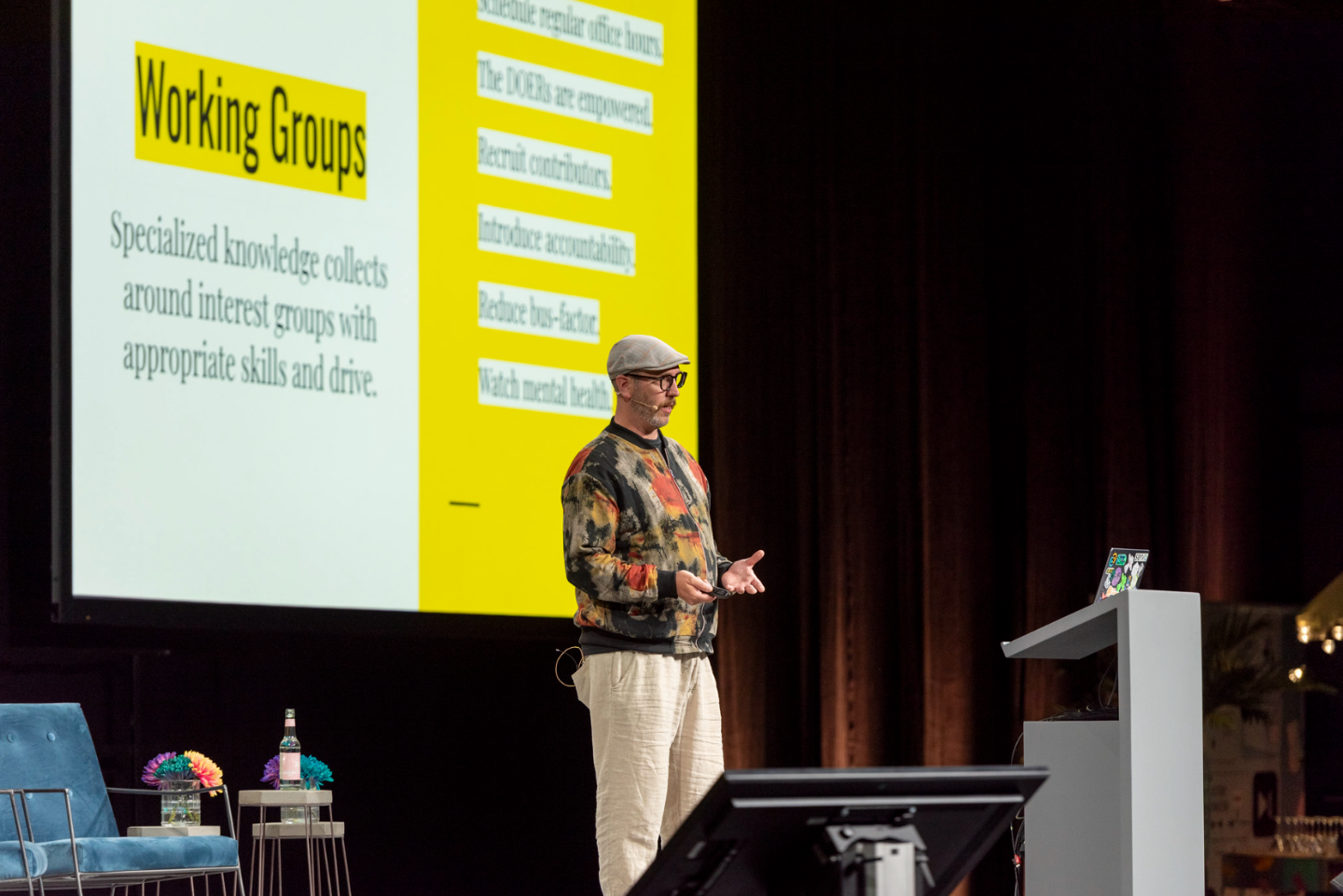
At the Merge conference held in Berlin in the middle of June, 2024, Daniel delivered a talk to a packed room about the critical topic of designing open source software communities in an ethical and resilient manner. Daniel, an advocate for sustainable and inclusive community practices, detailed a structured approach to evolving open source projects from informal beginnings to robust, organized collectives. His framework, moving from "just two friends" to a "core team," then to a "working group," and finally to either a "non-profit collective" or a “for-profit-venture” provides a roadmap for developers and community leaders aiming to foster collaborative and enduring open source initiatives.
By referring to examples and incorporating experience from his journey of forming, growing, and nurturing the Tauri Open Source Community, the talk consistently referred to lived experience.
Daniel began by addressing the initial stage of many open source projects: the "just two friends" phase. This phase is characterized by informal collaboration between a small number of contributors, often driven by a shared passion or interest. While this stage is crucial for establishing the project’s foundation, it also presents significant challenges. Key among these challenges is the risk of burnout, as a small team may struggle to manage the project's growing demands. He emphasized the importance of recognizing this stage as a temporary starting point, not a sustainable long-term model.
The transition to a "core team" is the first critical step in building resilience. A core team typically consists of a handful of committed contributors who take on more defined roles and responsibilities. This structure helps distribute the workload and introduces diverse perspectives, which can enhance the project's creativity and problem-solving capacity. Daniel highlighted the importance of clear communication and shared governance in this phase. Establishing regular meetings, transparent decision-making processes, and collaborative tools are essential practices that can help solidify the core team’s foundation and prepare for further expansion.
As the project continues to grow, the formation of a "working group" becomes necessary. A working group brings together a broader community of contributors who can participate in various aspects of the project. This stage is marked by more formalized roles, such as maintainers, contributors, and reviewers, each with specific responsibilities and areas of focus. Daniel stressed that inclusivity and diversity are paramount at this stage. Encouraging participation from a wide range of individuals not only strengthens the community but also ensures that the software developed is more robust and user-centric.
Finally, the evolution into a "non-profit collective" represents the pinnacle of organizational maturity for an open source community. This structure provides legal and financial stability, allowing the project to secure funding, manage resources, and protect its intellectual property. Daniel explained that forming a non-profit entity also enhances credibility and trust within the broader open source ecosystem. It demonstrates a commitment to ethical principles and long-term sustainability, which can attract more contributors, partners, and users.
Invariably, the question of funding comes up sooner or later. There are a variety of funding mechanisms available for open source software communities. Securing financial resources is crucial for sustaining and scaling open source projects, and understanding the diverse funding options can help communities choose the best strategies aligned with their values and goals. The mechanisms discussed included bootstrapping, donations, grants, and venture capital, each offering distinct advantages and challenges.
Bootstrapping involves funding the project from the founders' own resources. This approach is often the starting point for many open source initiatives, especially in the "just two friends" or "core team" stages. Bootstrapping allows the founders to retain full control over the project, ensuring that the vision and principles are not compromised by external influences. However, it can also be financially straining and limit the project's growth potential. Daniel emphasized that while bootstrapping can be effective in the initial phases, relying solely on personal funds may not be sustainable in the long term, particularly as the project scales.
Donations are a popular funding mechanism for open source projects, leveraging the support of the community and users who benefit from the software. Platforms like Patreon, Open Collective, and GitHub Sponsors facilitate recurring contributions from individuals and organizations. Donations align well with the open source ethos of community-driven support and can provide a steady stream of income. However, Daniel noted that building a reliable donation base requires effective outreach and engagement strategies. Transparency in how funds are used is crucial to maintain trust and encourage ongoing support from donors. A project shouldn’t be surprised if they are only able to raise enough money for stickers.
Grants from foundations, governmental bodies, and philanthropic organizations can provide significant financial support without the expectation of financial return. These grants are often aimed at projects that align with specific social, educational, or technological goals. Applying for grants requires a clear articulation of the project's impact, goals, and sustainability plans. He highlighted that while grants can provide substantial funding, the application process can be competitive and time-consuming. Moreover, grant funding is usually time-limited, necessitating a plan for financial sustainability beyond the grant period.
Venture capital (VC) involves securing investments from private investors or firms in exchange for equity in the project or company. This funding mechanism is typically pursued by open source projects with significant commercial potential and a clear path to monetization. VC funding can provide substantial capital, enabling rapid growth and scaling. However, Daniel cautioned that venture capital comes with the pressure to deliver financial returns, which may lead to decisions that prioritize profitability over the open source community's values and objectives. Founders must carefully consider the implications of equity dilution and the potential shift in project direction that VC funding might entail.
In addition to these primary funding mechanisms, he also discussed hybrid models that combine elements of different funding sources. For example, a project might bootstrap initially, then seek donations to support ongoing development, apply for grants for specific initiatives, and eventually consider venture capital to scale commercially viable aspects. Hybrid models can offer flexibility and resilience, allowing projects to adapt to changing financial needs and opportunities.
An undertone of the talk was the critical importance of mental health and well-being within open source software communities. Throughout his presentation, Daniel consistently highlighted the need to prioritize the mental health of contributors and foster a supportive environment. This recurring theme underscored the belief that the sustainability of open source projects is intricately linked to the well-being of those who contribute to them.
Daniel began by acknowledging that open source projects are driven by people who invest significant time, energy, and passion into their work. He emphasized that recognizing the human element behind the code is essential. Contributors often juggle multiple responsibilities, including full-time jobs, family commitments, and personal pursuits, in addition to their contributions to open source projects. This balancing act can lead to stress, burnout, and mental health challenges if not addressed proactively.
Creating a supportive culture within the community was a key point in Daniel's talk. He stressed the importance of fostering an environment where contributors feel valued, heard, and supported. This involves promoting open communication, providing constructive feedback, and acknowledging the efforts and achievements of all members. By building a culture of appreciation and respect, communities can enhance the overall well-being of their contributors.
Daniel also highlighted the importance of encouraging open conversations about mental health. Stigma surrounding mental health issues can prevent individuals from seeking help or sharing their struggles. By normalizing these discussions and creating safe spaces for contributors to express their concerns, communities can offer much-needed support and reduce the risk of burnout. He advocated for regular check-ins and the establishment of mental health resources, such as counseling services or peer support groups, to help contributors navigate their challenges.
Another crucial aspect discussed was the need to balance workload and manage expectations. Open source projects can sometimes demand intense commitment, leading contributors to overextend themselves. Daniel advised community leaders to be mindful of the workload distribution and to set realistic expectations for contributions. Encouraging contributors to take breaks, set boundaries, and prioritize their well-being can prevent burnout and ensure sustained participation.
Daniel emphasized the importance of reaching out to contributors and providing proactive support. He suggested that community leaders and core team members should regularly check in with contributors, especially those who seem to be struggling or disengaging. Offering help, whether through mentorship, additional resources, or simply a listening ear, can make a significant difference. The goal is to create a network of support where contributors feel comfortable seeking help and confident that their well-being is a priority.
To institutionalize these practices, Daniel recommended integrating mental health and well-being policies into the community's governance framework. This can include guidelines for respectful communication, procedures for conflict resolution, and protocols for supporting contributors facing mental health challenges. By embedding these practices into the community's structure, leaders can ensure that mental health remains a focal point as the project evolves.
---
There's probably a lot more that could be said, so if you have any comments or suggestions, please reach out to Daniel on LinkedIn or commenting this post. If you made it this far, please feel free to review the actual slides from the talk: Collaborative-Commons.pdf
---
Update!
A few days ago, I participated in an exciting NGI Talk:
✨Software as a Product: Risks and Opportunities✨
In this NGI Talk, I discussed the Cyber Resilience Act (CRA), the Product Liability Directive (PLD) and the updating of the Blue Book. This new paradigm will require software makers to add a CE mark to their products and follow new requirements.
✅ Are you a software maker wondering how these changes affect your business?
✅ Do you want to know what you need to do and when you need to comply?
This is a unique opportunity to learn what steps you need to take, what you must prepare for, and when you must comply.
👉 Learn EVERYTHING now by clicking here.
Stay safe, be healthy, and see you soon!